
Journey of an eel (scroll down↓)
Journey of an eel
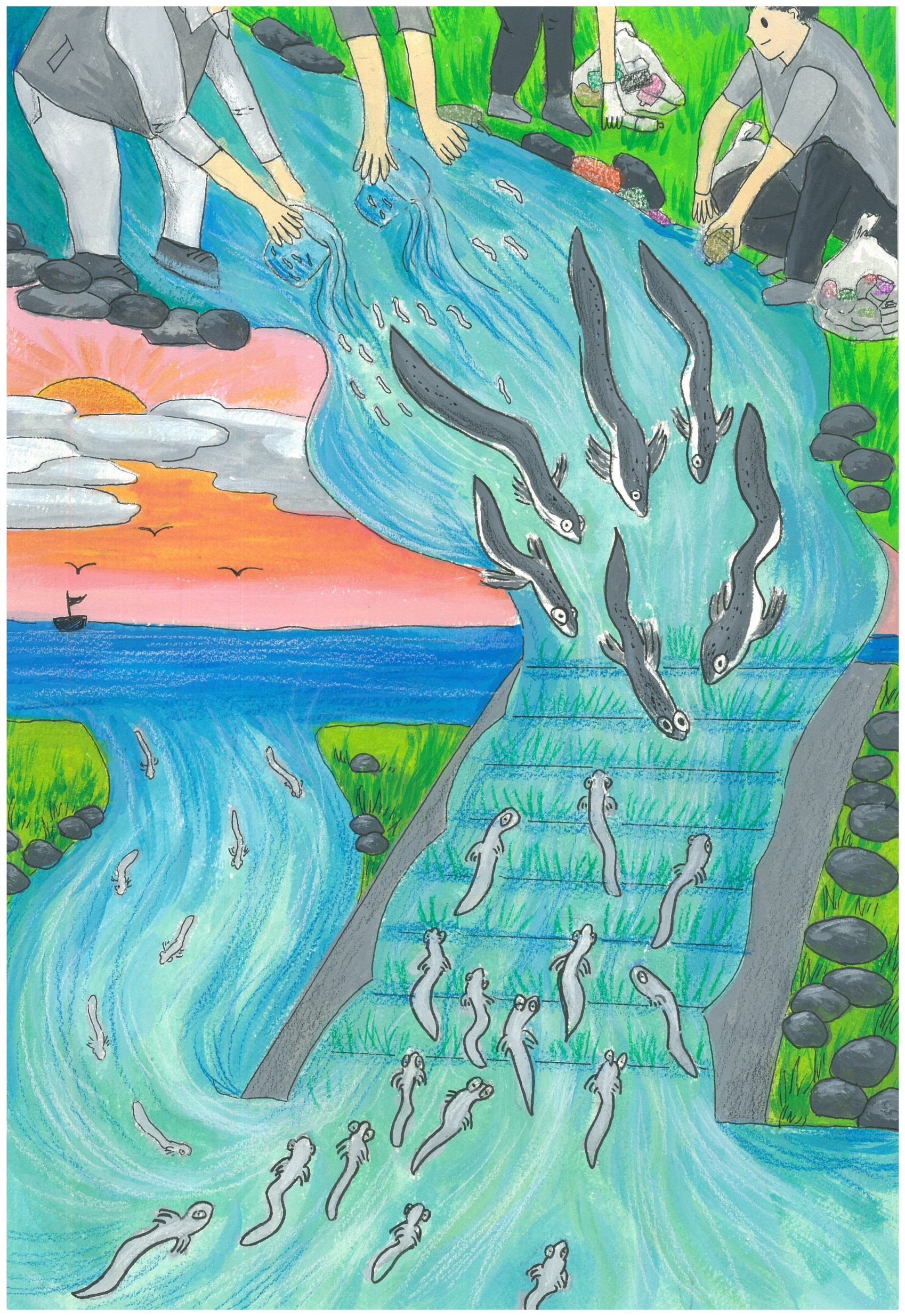
鰻魚是降海產卵的野生魚,橫跨海洋與河川,洄游長達五千多公里,耗時半年,壯遊回到出生地完成孕育下一代使命 。現今人類過度捕撈,棲息地破壞,鰻魚正逐漸消失中。我們透過鰻苗的培育與育成,營造一個適合環境進行放流,同時在上游設置魚梯,讓鰻魚洄游上溯, 大鰻魚與小鰻魚交會點是生命永續與傳承,讓生命生生不息。
Eels are wild catadromous fish that migrate to the sea to spawn. They travel across oceans and rivers for more than 5,000 kilometers and take up to half a year to return to their birthplace to complete their mission of nurturing the next generation.
However, due to overfishing and habitat destruction, eel populations are gradually declining. By cultivating and raising eel fry, we can create environments suitable for their release. In addition, installing fish ladders upstream helps support their migration.
The intersection of big eels and small eels symbolizes the sustainability and inheritance of life—and the endless cycle of nature that continues forever.
Description of Work
鰻魚是降海產卵的野生魚,橫跨海洋與河川,洄游長達五千多公里,耗時半年,壯遊回到出生地完成孕育下一代使命 。現今人類過度捕撈,棲息地破壞,鰻魚正逐漸消失中。我們透過鰻苗的培育與育成,營造一個適合環境進行放流,同時在上游設置魚梯,讓鰻魚洄游上溯, 大鰻魚與小鰻魚交會點是生命永續與傳承,讓生命生生不息。
Eels are wild catadromous fish that migrate to the sea to spawn. They travel across oceans and rivers for more than 5,000 kilometers and take up to half a year to return to their birthplace to complete their mission of nurturing the next generation.
However, due to overfishing and habitat destruction, eel populations are gradually declining. By cultivating and raising eel fry, we can create environments suitable for their release. In addition, installing fish ladders upstream helps support their migration.
The intersection of big eels and small eels symbolizes the sustainability and inheritance of life—and the endless cycle of nature that continues forever.